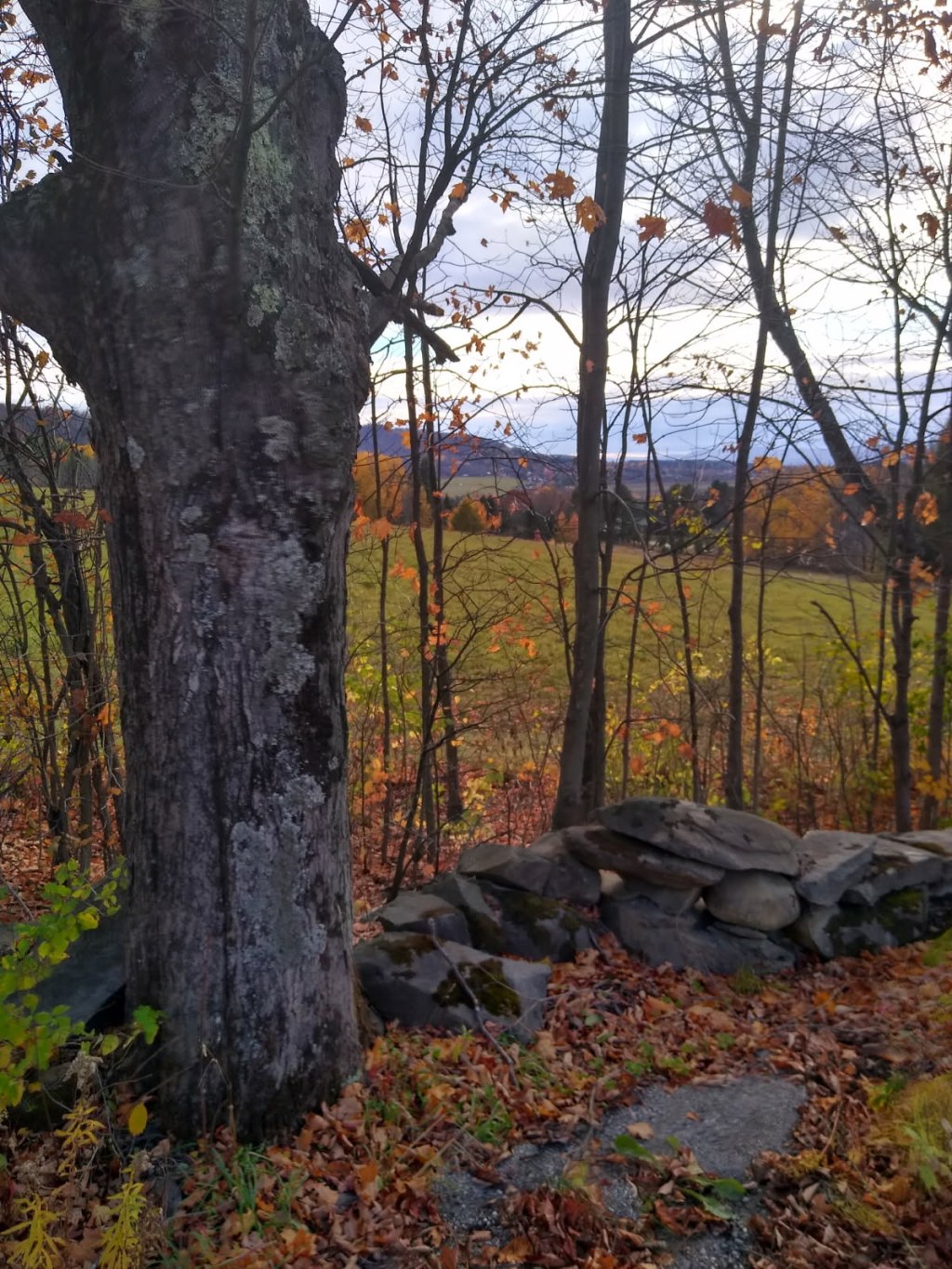
Learn from it. Let it go. Repeat.
I once had a girlfriend, and then one day she dumped me.
That’s a line from a song by The Vandals. It’s also an experience I had in 2009. She dumped me, and I became very depressed. The bright side is that I wrote a couple of songs about the experience. One of them is called As a Branch Letting Go of Its Leaves, and that song came to mind recently while I was contemplating letting go and moving on.
At the time, I was taking things personally and living as though my preferences for reality were something that should be pursued, or even enforced. Hence the misery I felt when I didn’t get what I wanted.
I’m sure the 2009 version of myself would have said that she made me sad. But is that really what happened?
She didn’t make me feel anything. She expressed her preference for our relationship, which resulted in a change in my circumstances. That change no longer matched my preference, so I felt pain and sadness. And that’s appropriate. Losing something meaningful hurts.
But I resisted that pain because I didn’t like it, and that’s when my pain and sadness turned into suffering.
She didn’t make me suffer. My resistance did.
It’s easier to see in retrospect.
My resistance came in the form of hoping she would change her mind and wishing things were different than they were. It’s akin to yelling at the sky when it’s raining on the day I planned to have a picnic. I can yell myself hoarse, but I can’t change the rain.
Wanting the rain to stop isn’t necessarily a problem. Neither is wanting a relationship to continue. The trouble begins when I can’t accept that reality isn’t cooperating with my preferences.
Looking back, did I really want her to go against her own preferences to satisfy mine? On some level, yes. But if I give it honest consideration, of course not. Nothing good comes from imposing your will on someone else.
I was deeply attached to my preference, and the depth of that attachment was likely connected to my own insecurity. That’s a whole other trail to follow another day.
In my sadness, I wrote a song using the metaphor of a tree dropping its leaves in autumn to represent how I wanted to let go of my sadness. It was September when she dumped me, and I held onto that suffering well into the winter. I don’t recall exactly when I wrote the song.
It’s interesting to consider my old lyrics through the lens of my current understanding and awareness. They take on more meaning to me now, without diminishing the meaning they held for me then.
But this isn’t all about nostalgia. I have a simple thought to share about trees.
The Tree and Its Leaves
Recently, while contemplating letting go of whatever no longer serves me—resisted energy, limiting beliefs, or whatever else I might be carrying—my old song came to mind.
I pictured a massive tree standing alone in a field. Some leaves were already on the ground, some were drifting away on the wind, and others remained attached to the branches.
Can you picture it?
A warning before we continue: I’m not an arborist, and what follows isn’t intended to be a scientific explanation of trees. The symbolism isn’t to scale. It’s cartoonishly illustrative. Bear with me.
Looking at this imaginary tree, I wondered: What happens when a tree holds onto its leaves past their time?
I’m not suggesting a tree does this willfully, but I’m not saying it doesn’t either. I’m not the boss of the trees.
I live in Vermont, where most deciduous trees drop their leaves in autumn. The evergreens, of course, do their own thing.
Imagine a tree that doesn’t release its leaves as winter approaches. When the snow and ice arrive, those leaves provide additional surfaces for accumulation and resistance to the wind. Under the right conditions, that extra burden could contribute to branches breaking.
The leaves that once served the tree during its season of growth have become something it would be better off releasing.
I think we do something similar.
We hold onto experiences, expectations, beliefs, and emotional reactions long after the circumstances that produced them have passed. What once seemed important, meaningful, or even necessary can become a burden when we refuse to let it go.
When my girlfriend ended our relationship, she was, in essence, telling me it was time for a new season. But I didn’t want a new season. I wanted to stay in the one I was enjoying.
And so I resisted.
The relationship had ended, but I continued trying to live in it through my thoughts, hopes, and expectations. I couldn’t change what had happened, but I could keep wishing it hadn’t happened. And I did.
It hurt to lose the relationship, and that’s okay. What I didn’t understand at the time was that I could allow myself to feel that hurt without trying to change the circumstances that caused it.
Perhaps it hurts a leaf to fall from a tree. If we anthropomorphize the leaf, I imagine the experience would be terrifying. One moment it’s securely attached to a branch, and the next it’s drifting toward an uncertain future.
But nature says it’s time to go.
What Falls Away Can Still Serve Us
There’s another part of this metaphor that I find particularly meaningful.
When a tree drops its leaves, they don’t simply disappear. They fall to the ground, where they gradually decompose and contribute nutrients to the surrounding ecosystem. That ecosystem, in turn, supports the tree’s future growth.
The leaves have served their purpose in one season, but they still have something to contribute to the next.
Perhaps our experiences work similarly.
If I continue clinging to an experience, wishing it were different or trying to preserve something that has already passed, I may prevent myself from fully appreciating what that experience has to teach me.
My relationship in 2009 didn’t continue the way I wanted it to. That was painful. But the experience also gave me opportunities to learn about attachment, insecurity, personal preferences, and the difference between pain and suffering.
I couldn’t appreciate all of that at the time. I was too busy wishing things were different.
Now, many years later, I can look back on the experience without the same emotional burden. I can remember the relationship, appreciate what it meant to me, recognize what I learned, and even enjoy the songs I wrote because of it.
The experience hasn’t changed. My relationship with it has.
That’s what I mean by letting go.
Letting Go Isn’t Forgetting
Letting go doesn’t mean forgetting what happened, pretending it didn’t matter, or denying the emotions that accompanied it.
We’re talking about releasing our resistance to the experience, not erasing the experience itself.
Memories can remain without requiring us to relive the emotional struggle that once accompanied them. We can remember being hurt without continuing to fight the circumstances that hurt us.
The tree doesn’t need to hold onto last autumn’s leaves to benefit from them. Their contribution becomes part of the environment in which the tree continues to grow.
Likewise, I don’t need to hold onto the suffering associated with my past to benefit from what I’ve learned.
And perhaps that’s the part of my old song that means the most to me now.
In 2009, I wanted to let go because I didn’t want to hurt anymore. Today, I see letting go as something more than an escape from pain. It’s a willingness to experience life as it unfolds, to allow things to change, and to recognize that something can be meaningful without needing to last forever.
The tree doesn’t stop growing because it loses its leaves. Losing its leaves is part of how it continues growing.
And when another season comes, it grows new ones.
Learn from it. Let it go. Repeat.


Leave a Reply